












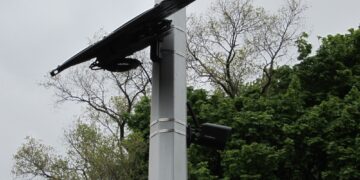





LAPD’s plan for 18 cameras between Olympic and Santa Monica boulevards is on hold after Council District 13 declined donated cameras from Axon.
An LAPD plan to put automated license plate readers along Western Avenue to target sex trafficking has stalled after Councilmember Hugo Soto-Martínez’s office declined a donation of the cameras from Axon Enterprise, LA Local reported.
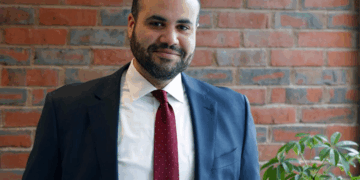
“We are against ALPRs. We don’t want to see them in our district,” said Andoni Elias Nava, a spokesperson for Council District 13. “So once we realized what that was, we said we don’t really want them in our district,” he said.
Senior Lead Officer Lucy Bermudez confirmed Thursday that the cameras have not been installed along the corridor and that the project is on hold, according to LA Local.
THE ORIGINAL PLAN
LAPD had said it planned to install 18 cameras on Western Avenue between Olympic and Santa Monica boulevards, a stretch the department has targeted for sex trafficking, with live-feed monitoring and license plate recognition, LA Local reported. The department said the system could be running by July.
“I think they’ll be a great asset for us in being able to identify people who are predatory on some of the women that are there and allow us to identify some of the human traffickers,” Capt. Ryan Lee of LAPD’s Olympic Division said at the time.
At a March neighborhood council meeting, Bermudez described the plan. “The goal is for someone to monitor these cameras at any given time,” she said, “and get plates and make arrests of individuals taking advantage of these women.”
A DISPUTE OVER FUNDING
Senior Lead Officer Harry Cho said Monday that the cameras had been expected to be funded by Council Districts 13 and 10 but that District 13 had pulled its funding. “Right now, there’s no cameras that are city-operated on Western,” Cho said at the Wilshire Center-Koreatown Neighborhood Council meeting, LA Local reported.
Nava disputed that. “We never committed any kind of funding. The cameras from Axon were supposed to be fully funded by Axon. They were a donation to PD,” he said. “There was no funding that was given to be pulled in the first place.”
Soto-Martínez’s office is now considering cameras without license plate reader technology, to be maintained by the Bureau of Street Lighting, and the councilmember is expected to bring a proposal to the City Council before the end of the year, according to LA Local. The number of cameras is still being worked out.
Activists who oppose police surveillance say even that goes too far. “But a camera is a camera is a camera. It doesn’t have to be enabled with ALPR technology to still be really harmful,” Jayme Kusyk, a Koreatown resident and member of the Stop LAPD Spying Coalition, said.
THE COUNCIL’S EARLIER VOTES
The camera dispute follows a broader City Council fight over Axon’s license plate readers. On Oct. 6, the council voted 10-4 to assert jurisdiction over the Police Commission’s approval of an Axon pilot program putting the readers on city streetlights. A later veto of the pilot received nine votes on Oct. 27, one short of the 10 needed to overturn the commission. Soto-Martínez and Councilmember Heather Hutt, whose District 10 also covers part of the corridor, voted for the veto, LA Local reported.
A spokesperson for Council District 10 did not immediately respond to LA Local’s request for comment, and an Axon spokesperson did not immediately respond either, the outlet reported.