





















Debate over California’s primary system highlights broader tensions around representation, population, and political fairness.
In a recent column circulated by the Los Angeles Times, political columnist George Skelton argued that California’s current election system may be producing unintended consequences, suggesting it could lead to a general election ballot without a Democratic candidate for governor.
“It’s probably time for California to reform the outdated ‘reform’ that could be leading us into an absurd November election with no Democratic candidate for governor allowed on the ballot,” Skelton wrote.
The remarks quickly drew criticism from commentators and political observers who argued that Skelton’s concern overlooks a broader principle embedded in American governance: representation based on population.
Under the U.S. Constitution, congressional representation in the House of Representatives is apportioned strictly by population, with each state receiving seats proportional to its number of residents. This system, critics note, does not guarantee partisan balance or outcomes favorable to any political party—it reflects voter distribution.
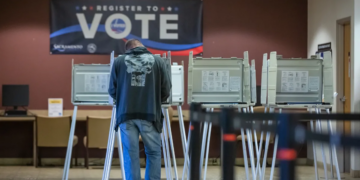
Observers pushing back on Skelton’s argument say the same logic applies to California’s election system. The state’s “top-two” primary structure, approved by voters in 2010, advances the two highest vote-getters regardless of party affiliation. In heavily partisan states like California, that can result in general election matchups between candidates of the same party.
California’s system mirrors, in some respects, the federal model: neither guarantees ideological diversity in outcomes. For example, heavily Democratic districts often elect only Democratic representatives, just as heavily Republican districts reliably elect Republicans.
The debate ultimately underscores a larger philosophical divide: whether election systems should prioritize proportional representation of voters as they are, or attempt to structure outcomes to ensure partisan diversity.
As California approaches its next gubernatorial cycle, that question—rooted in both state and federal precedent—is likely to remain at the center of political discourse.